Reaction Time Training: How to Improve Speed, Focus, and Reflexes
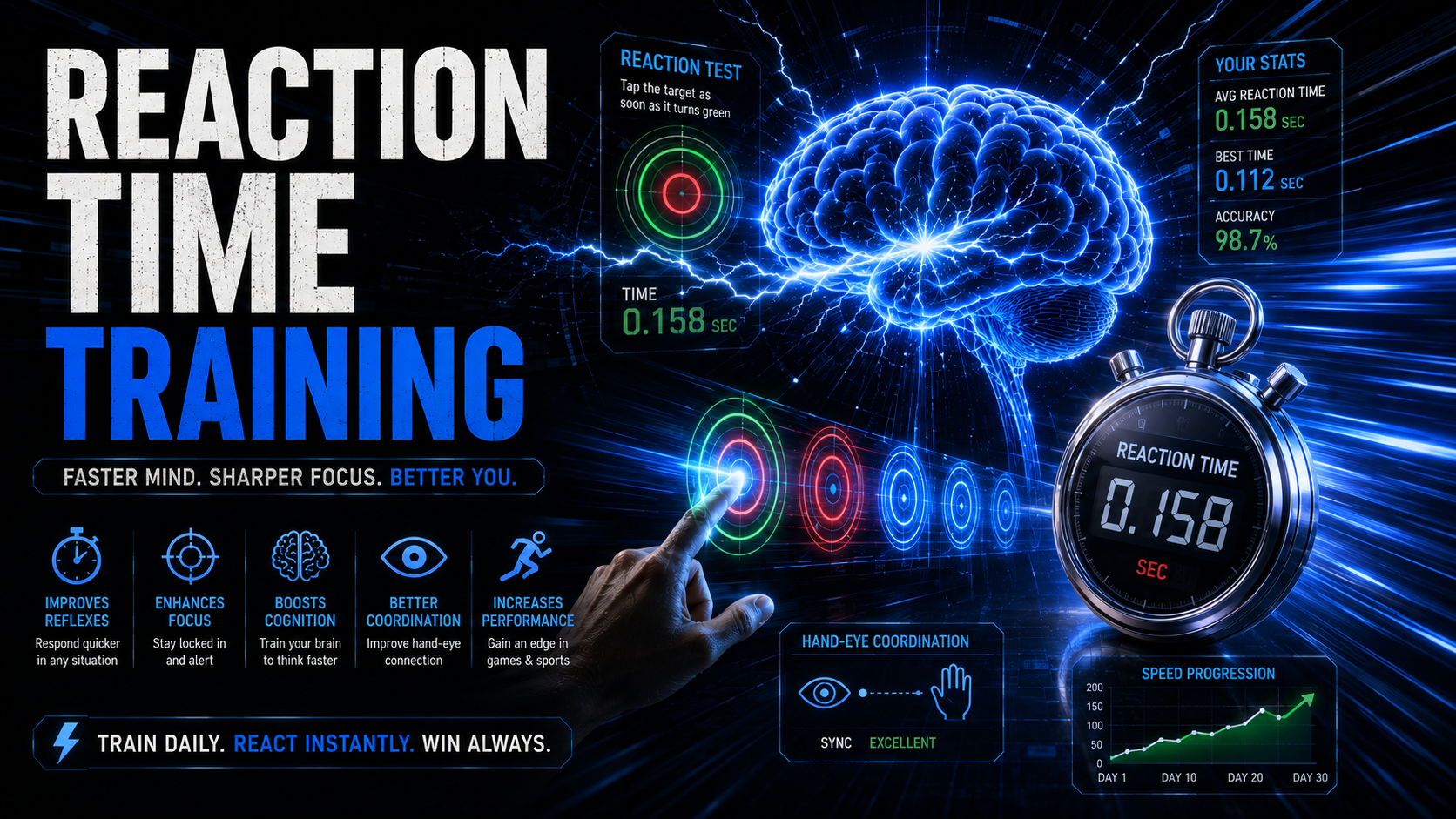
Learn what reaction time is, why it matters, and discover science-backed methods to improve your reflexes, focus, and decision-making speed.
Introduction
Reaction time is one of the most important cognitive abilities in everyday life. Whether you're driving a car, playing sports, gaming competitively, or simply catching a falling object, your brain constantly processes information and tells your body how quickly to respond.
Many people assume reaction time is determined entirely by genetics. While genetics do play a role, scientific research shows that reaction speed can improve through consistent practice, healthy habits, and better cognitive performance.
This guide explains what reaction time is, what affects it, and the most effective methods for improving it naturally.
What Is Reaction Time?
Reaction time is the amount of time between noticing a stimulus and responding to it.
A stimulus can be visual, such as seeing a red light, auditory, such as hearing a whistle, or tactile, such as feeling an object touch your hand.
Your brain must first recognize the information, process it, decide what to do, and finally send signals to your muscles.
How the Brain Processes Reactions
Every reaction begins when your senses detect information from the environment.
The information travels through sensory nerves to the brain where it is analyzed. The brain then sends commands through motor neurons to the muscles responsible for movement.
This entire process usually happens in only a few hundred milliseconds.
Average Human Reaction Time
The average visual reaction time for healthy adults is approximately 200 to 250 milliseconds.
Professional esports players and elite athletes often react significantly faster due to years of specialized training.
Reaction speed varies depending on age, sleep quality, health, and the complexity of the task.
Why Reaction Time Matters
Fast reaction times improve driving safety by allowing quicker responses to unexpected hazards.
Athletes rely on reaction speed to respond to opponents and changing situations.
Competitive gamers benefit from faster reactions during high-speed gameplay.
Many careers also depend on rapid decision-making under pressure.
Factors That Affect Reaction Time
Age, sleep quality, stress, hydration, nutrition, physical fitness, attention, distractions, alcohol, medications, and overall brain health all influence reaction speed.
Even small amounts of fatigue can noticeably slow cognitive performance.
Sleep and Reaction Speed
Sleep deprivation is one of the biggest causes of slower reaction times.
Missing only a few hours of sleep reduces attention, increases mistakes, and delays decision-making.
Most adults achieve their best cognitive performance after seven to nine hours of quality sleep.
Exercise Improves Reflexes
Regular exercise improves blood circulation, coordination, balance, and communication between the brain and muscles.
Sports involving quick decisions, such as tennis, boxing, football, basketball, and table tennis, naturally improve reaction speed.
Brain Training Exercises
Reaction training apps.
Visual reaction tests.
Memory games.
Pattern recognition puzzles.
Hand-eye coordination drills.
Tracking moving objects.
Logic puzzles.
Fast decision-making games.
Nutrition for Faster Thinking
A healthy brain performs faster.
Omega-3 fatty acids, eggs, berries, leafy vegetables, nuts, and adequate hydration support cognitive function and mental processing speed.
Avoid excessive sugar and dehydration before mentally demanding activities.
Gaming and Reaction Time
Action video games can improve visual attention, hand-eye coordination, and decision speed when played in moderation.
However, excessive gaming without sleep or exercise eventually reduces cognitive performance.
How to Measure Your Reaction Time
Online reaction tests.
Mobile reaction apps.
Gaming aim trainers.
Sports reaction drills.
Computer-based cognitive assessments.
Daily Routine to Improve Reaction Time
Sleep well every night.
Exercise regularly.
Practice reaction drills for fifteen to twenty minutes.
Solve logic puzzles.
Train working memory.
Reduce digital distractions.
Maintain healthy nutrition.
Stay hydrated.
Common Myths
Many people believe reaction time cannot improve. Research shows that practice and healthy habits significantly improve processing speed.
Another myth is that only athletes benefit from faster reactions. In reality, everyone benefits from quicker decision-making and better attention.
Final Thoughts
Reaction time reflects how efficiently your brain processes information and communicates with your body.
Although genetics influence natural ability, consistent training, quality sleep, exercise, healthy nutrition, and brain exercises can produce meaningful improvements.
Improving your reaction time benefits sports, gaming, driving, learning, and everyday life while also supporting overall cognitive performance.
Frequently Asked Questions
What is considered a good IQ score?
An IQ score around 100 is considered average. Scores above average may indicate stronger reasoning abilities, while lower scores simply reflect different cognitive performance compared with the population average.
Can I increase my IQ?
While IQ tends to remain fairly stable, healthy habits, education, regular exercise, quality sleep, and continuous learning can improve cognitive performance and problem-solving ability.
Are online IQ tests accurate?
Most online IQ tests are designed for entertainment and practice. Only professionally administered IQ assessments can provide standardized results.
Does IQ determine success?
No. Success depends on many factors including discipline, education, experience, emotional intelligence, communication skills, and persistence.
Related Articles
What Is IQ? Complete Beginner's Guide
Learn what IQ means, how IQ tests work, average IQ scores, and common myths.
What Is Brain Rot? Causes, Symptoms, and Recovery Guide
Discover what brain rot really means, why it happens, how social media affects attention, and practical ways to improve your focus.
Ready to Challenge Yourself?
Take our free IQ test and discover your cognitive strengths.
Start IQ Test